
One-stop comprehensive solution provider

ProductIntroductionA ball mill is a grinding machine used to reduce materials to extremely fine powders (even to micron or nano sizes). It works by rotating a cylindrical shell, causing steel balls inside to cascade and grind the material through impact and attrition. Known for its robust cons
Equipment Parameters
| Model | Cylinder Size (mm) | Capacity (T/H) | Max Feeding Size (mm) | Output Size (mm) | Ball Loading (T) | Cylinder Speed (r/min) | Installed Power (kW) | Equipment Dimension (mm) | Weight (T) | Application Materials | Application Area |
| BM-900×1800 | 900×1800 | 0.5-2 | ≤20 | 0.074-0.4 | 1.5 | 36-38 | 18.5 | 4200×2200×2300 | 4.8 | Limestone, Ore, Ceramic Materials | Small Grinding & Pilot Production Line |
| BM-1200×2400 | 1200×2400 | 2-5 | ≤25 | 0.074-0.4 | 3 | 32-35 | 30 | 5600×2600×2600 | 8.5 | Cement Clinker, Ore, Quartz Sand | Medium-small Grinding System |
| BM-1500×3000 | 1500×3000 | 5-10 | ≤25 | 0.074-0.3 | 5.5 | 28-32 | 75 | 7200×3200×3000 | 15 | Ore, Coal Powder, Chemical Materials | Medium Continuous Grinding System |
| BM-1830×4500 | 1830×4500 | 10-20 | ≤30 | 0.074-0.2 | 11 | 24-28 | 155 | 9200×3600×3400 | 28 | Cement, Slag, Metallurgical Materials | Large Industrial Grinding Line |
| BM-2200×6500 | 2200×6500 | 20-35 | ≤35 | 0.074-0.2 | 21 | 21-24 | 280 | 12500×4200×4100 | 46 | Metal Ore, Non-metallic Minerals | Large Mining & Cement System |
| BM-2700×9000 | 2700×9000 | 35-60 | ≤40 | 0.045-0.15 | 38 | 18-21 | 475 | 16800×5200×4800 | 78 | Large Ore, Cement Clinker, Chemical Materials | Large Continuous Industrial Grinding System |
application
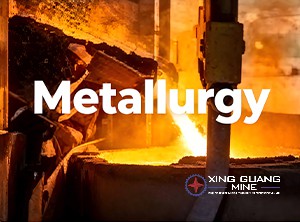
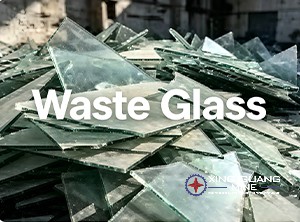
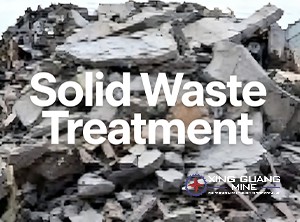
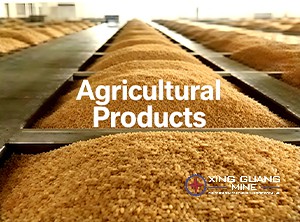
Product Introduction
A ball mill is a grinding machine used to reduce materials to extremely fine powders (even to micron or nano sizes). It works by rotating a cylindrical shell, causing steel balls inside to cascade and grind the material through impact and attrition. Known for its robust construction, high adaptability, and ability to produce ultra-fine particles, it is essential in mining, cement, ceramics, and chemical industries.
workflow diagram

Working Principle: Synergy of Impact and Attrition
The ball mill's operation relies on the movement of grinding media (steel balls) inside a rotating cylinder.
1.Key Action: Cascading & Cataracting
Rotation drives media: An electric motor rotates the horizontal cylinder. The steel balls and material inside are lifted by centrifugal force and friction.
Cataracting (Impact): At optimal speed, balls are carried to a certain height and then fall in a parabolic trajectory, delivering powerful impact to the material below, crushing coarse particles.
Cascading (Attrition): Simultaneously, balls slide and roll over each other and the liner, providing continuous grinding and shearing for fine particles.
2.Critical Role of Rotational
SpeedTooslow: Balls only roll, mostly attrition, insufficient impact.
Optimal (typically 75-80% of critical speed): Best combination of impact and attrition → highest efficiency.
Too fast: Balls stick to the wall due to centrifugal force → no grinding.
Continuous Operation: Material enters at one end, is repeatedly ground, and exits as finished powder at the other end.
Core Advantages: Why Widely Used
High Fineness: Capable of grinding down to 0.002 mm (2 microns) or even nano scales.
Strong Adaptability: Handles materials of various hardness; supports both dry and wet processes.
Simple & Reliable: Rugged structure for continuous 24/7 operation in harsh environments.
Easily Controllable: Fineness can be precisely adjusted by changing ball charge, speed, or grinding time.


